
OUR SERVICES

911 Diversion
911 diversion provides an opportunity for individuals who call into the 911 call center who are experiencing a behavioral health crisis and don't require a medical response to be connected to a trained counselor for resources and support. Services can include supportive counseling, a mobile crisis response, and connection to an outpatient resource.
Residential Services
We offer three levels of residential care for our clients: Crisis Residential Unit (CRU), Detox, and 3.7 Addiction Treatment Unit (ATU). The CRU serves individuals with a mental health crisis who need stabilization and support. While at the CRU, individuals will be seen by psychiatrists, case managers, nurses, and residential counselors daily and will attend wellness/recovery groups. The Detox unit provides withdrawal management for individuals using benzodiazepines, opiates, and alcohol. After Detox, most individuals transfer to the ATU, which provides a supportive recovery-focused substance use disorder treatment environment. In both units, individuals attend recovery groups and meet one-on-one with addiction counselors, care coordinators, and nurses daily. Upon discharge, individuals are followed by a care coordinator for 30-days post-discharge.
Targeted Case Management
We provide individualized case management services to support clients in accessing and maintaining medical, behavioral health, and social services in partnership with local hospitals, outpatient behavioral health providers, housing programs, legal aid, DSS, and Maryland Health Connection. This includes needs assessments, care planning, referrals, linkage to community resources, follow-up appointments, and coordination among service providers. Services are delivered by trained case managers who coordinate care across systems. Clients typically include adults with complex medical, behavioral health, and social needs, often experiencing housing instability or justice involvement. If you are a provider or individual looking to access TCM referral forms, please visit the Referrals page.
Youth Care Coordination
Youth Care Coordination, or YCC, involves specialized care coordination for youth and young adults with behavioral health needs, substance use challenges, or other complex social service needs. We focus on engaging families, schools, recreation centers, and community supports to promote stability, academic success, and recovery. Services are delivered by youth care coordinators, social workers, and counselors, who carry out assessments, care planning, linkage to resources, follow-up, and coordination between providers and natural supports. The target population includes youth aged 5–21 and their families, with emphasis on collaborative care planning, advocacy, school engagement, recreational involvement, and linkage to sustainable community resources. If you are a provider or individual looking to submit a referral, visit the Behavioral Health Coordination for Children and Youth/1915i form on our Referrals page.
Mobile Response Teams
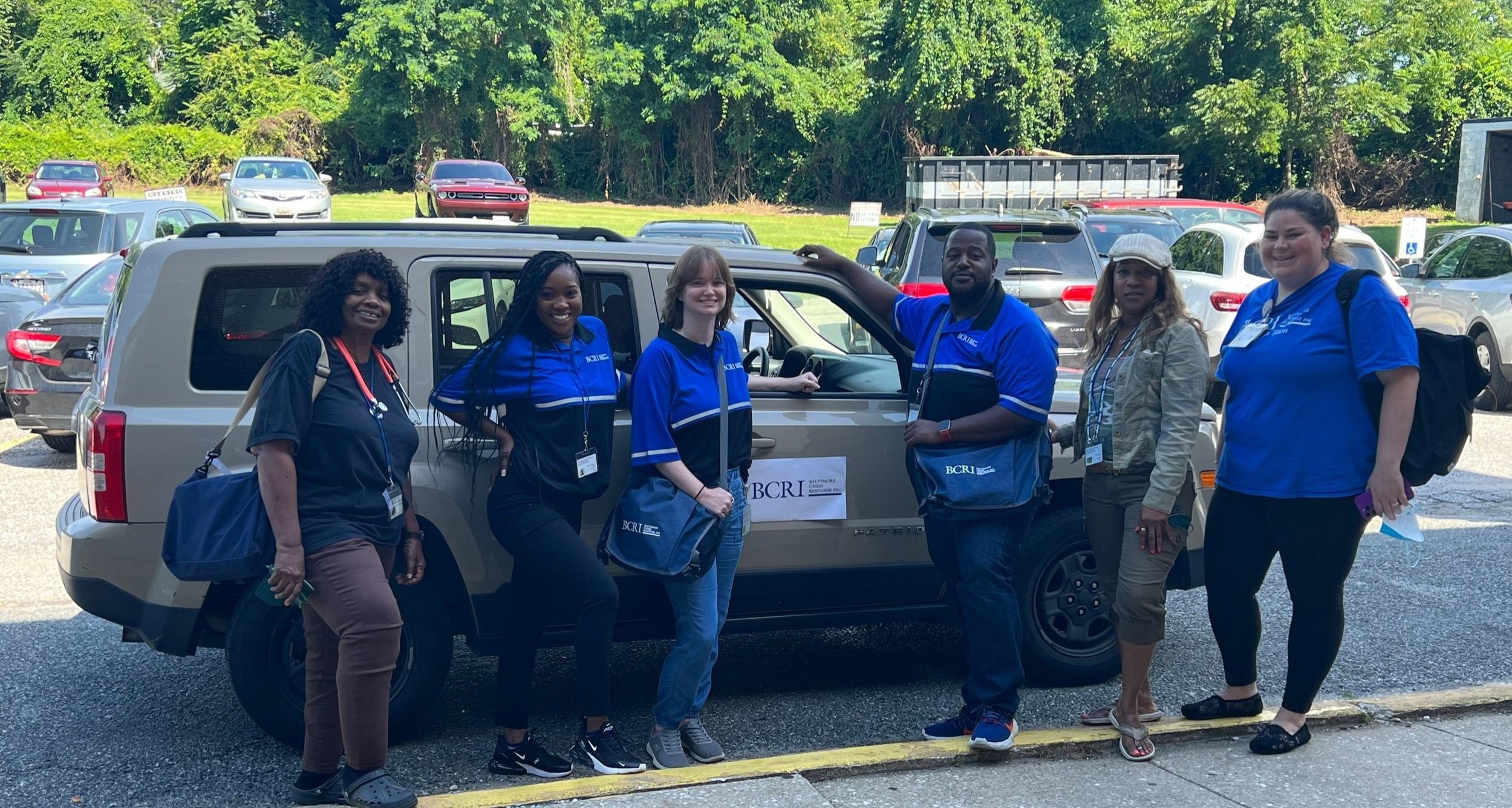
Our team of clinicians, peers, and nurses work in tandem with our call center team to be the first responders to residents experiencing a behavioral health crisis. Ourresponders are available 24/7 to help residents seeking assistance from community providers, hospitals, and police in the least restrictive alternative available. This service helps reduce ER wait times and police involvement.

Community Support & Engagement
CPR responds to traumatic events in Baltimore City, providing supportive counseling and critical incident debriefing to individuals and/or community groups who have experienced severe trauma such as violent crime, sudden death, natural disasters, or other distressing events. CPR also participates in community outreach activities including block parties, health fairs, activities, and events to promote health and wellness in the community. Additionally, we are part of Baltimore City’s Domestic Preparedness response to terrorist attacks. We also provide public and professional education and training on a wide range of mental health-related topics including suicide prevention, stigma, crisis intervention, and emergency behavioral health issues.
Police Trainings
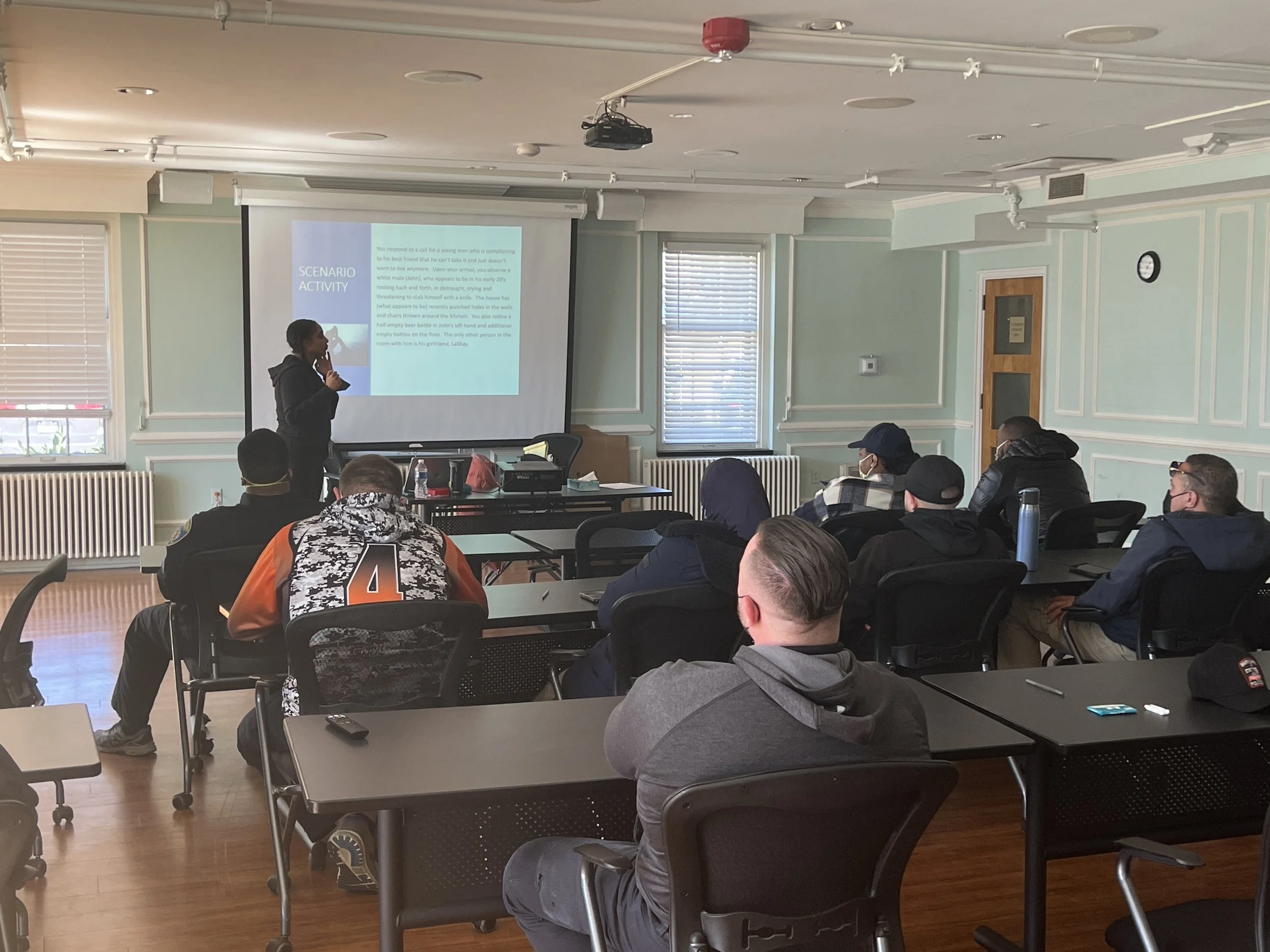
We work directly with Baltimore Police Department to offer up-to-date Crisis Intervention Trainings and workshops for the continuing education of their staff. These trainings allow officers to better assess the needs of the community and how to provide best first responder services to individuals in crisis without escalation.
Law Enforcement Assisted Diversion
Law Enforcement Assisted Diversion (LEAD) was established in 2017 as a pre-booking diversion program that allows officers to redirect low-level offenders engaged in drugs or prostitution activity to community-based services instead of prosecution. LEAD participants are connected to CPR’s trauma-informed intensive case management services. Our case managers and peer support specialists work with participants from a harm reduction perspective, “meeting the client where they are.” They connect them to a wide range of support services, including housing, mental healthcare, and substance use disorder treatment. This public safety program has reduced recidivism rates for low-level offenders, improved participants’ overall quality of life, and helped them maintain housing and behavioral health recovery.
Research & Policy Development
In order to provide the best care that’s trauma-informed and holistic, we are consistently looking to expand our scope of knowledge in behavioral health science. Our data-driven treatment programs and advocacy for behavioral health infrastructure expansion has helped pave the way for better policymaking in Baltimore City and the greater state of Maryland to address the growing needs in mental healthcare.
ERPO Counselors
An Extreme Risk Protective Order (ERPO), or “red flag law”, is a court-issued civil order temporarily requiring a person who has been determined to be a danger to themselves or others to:
Surrender firearms / ammo to law enforcement, and;
Not purchase or possess firearms / ammo.
In conjunction with Johns Hopkins University, starting this year, CPR will be implementing a pilot program that will employ social workers to provide education and training to Baltimore City residents and community providers on , focusing on gun safety education and how to file an order request to remove firearms.

988 Helpline
CPR is available 24/7/365 to answer the 988 National Suicide Prevention Lifelines for the Baltimore Metro Region. Trained and caring counselors provide mental health and substance use information and referrals, supportive counseling, suicide crisis intervention, and adolescent crisis intervention. They also dispatch Mobile Response Teams and link callers with more intensive services within CPR or the community if needed.
Our Partners
Our advocacy for the mental healthcare industry has led to important public investments in our daily operations, as well as joining forces with other community stakeholders to improve health outcomes for vulnerable populations.
Share Our Work
Our continued service to community starts with your help.
To view and share our services in a simple one-pager format, click the link below.
-
In collaboration with BHSB, we have joined forces with providers in the area under the Greater Baltimore Regional Integrated Crisis System Grant to invest in stronger behavioral healthcare infrastructure over a 5 year period. BCRI will be the sole provider for youth mobile response services in Baltimore City and the backup responder to Baltimore County, serving both youth and adults.
In this partnership, BCRI serves as the regional 988 Call Center Administrator and works with other providers to deliver life-saving services without relying on emergency departments or police intervention. Our operators can direct callers to more intensive BCRI services or other appropriate community services, as well as dispatch Mobile Response Teams when needed.
-
Behavioral Health System Baltimore, Inc. (BHSB) is a nonprofit organization tasked by Baltimore City to act as the local behavioral health authority, which performs the function of managing Baltimore City’s behavioral health system—the system of care that addresses emotional health and well-being and provides services for individuals with substance use and mental health disorders.
BHSB helps guide innovative approaches to prevention, early intervention, treatment and recovery for those who are dealing with mental health and substance use disorders by engaging in policy development and legislative advocacy, raising public health awareness of behavioral health issues, and allocating resources for mental health and substance use disorder services to Baltimore service providers.
As a comprehensive provider of behavioral health and substance use services in Baltimore and Central Maryland, BCRI works in close partnership with BHSB to serve the people of Baltimore City.
-
As a result of the American Rescue Plan, monies were dispersed to local governments around the country to make community health improvements. With funding from the Baltimore City Mayor’s Office of Neighborhood Safety & Engagement (MONSE), we provided mental health training, community outreach, and Critical Incident Debriefings to 433 individuals in 13 various zip codes around the city.
BCRI’s Peer Support Team, which was also supported by this grant, responded to 14 individuals in crisis linking 9 individuals to outpatient treatment, 3 individuals to addiction treatment, 9 individuals to recovery groups, and 4 individuals to housing support.
We also offer up-to-date Crisis Intervention Trainings and workshops for the continuing education of our participants. This program allows officers/security officials to better assess the needs of the community and how to provide best first responder services to individuals in crisis without escalation.
-
The Baltimore City Mayor's Office is currently held by Mayor Brandon M. Scott. Previously serving on the City Council representing Baltimore's 2nd District and then as City Council President, Mayor Scott and his office have worked tirelessly to build a better Baltimore by tackling issues such as violence reduction and prevention, data transparency, public official accountability, and equity for marginalized groups.
Baltimore City has a number of mayoral offices that specialize in certain matters within the metropolitan area. Related mayoral offices in the behavioral health and substance use field include the Mayor's Office of Neighborhood Safety and Engagement and the Mayor's Office of Homeless Services.
BCRI is extremely fortunate to work in close collaboration with the Baltimore City Mayor's Office in areas like 911 Diversion and community outreach. The Mayor's Office is a demonstrated ally of regional behavioral health service providers like BCRI who engage in the collective effort to improve Baltimore City for all walks of life.
-
In conjunction with Johns Hopkins University, starting this year, BCRI will be implementing a pilot program that will employ social workers to provide education and training to Baltimore City residents and community providers on ERPO, focusing on gun safety education and how to file an ERPO request to remove firearms.
An Extreme Risk Protective Order (ERPO), or “red flag law”, is a court-issued civil order temporarily requiring a person who has been determined to be a danger to themselves or others to 1) surrender any firearms and/or ammunition to law enforcement and 2) not purchase/possess firearms and/or ammunition.
-
BCRI is a proud partner of many local academic institutions, including the University of Maryland-Baltimore (UMB).
BCRI currently partners with UMB’s EMBRACE Resource Center for project management support in order to expand internal capacity and ensure community voice is incorporated into organizational development efforts.
-
BCRI has the privilege of partnering with the federal AmeriCorps VISTA program.
AmeriCorps VISTA (Volunteers in Service to America) provides resources to public agencies and nonprofit organizations to create & expand programs that empower communities and individuals to overcome poverty and increase health equity.
BCRI is a host site for VISTA members, who gain valuable experience and benefits through AmeriCorps while building capacity and serving the community during their service year at BCRI.

WE SERVE EVERYONE
We’re proud to be an inclusive and affirmative provider for behavioral health services in Maryland, no matter someone’s gender identity, sexual orientation, race/ethnicity, religion, nationality, age, or abilities. Learn more about why our services are needed for the LGBT+ community and how we provide a healing environment for all.